
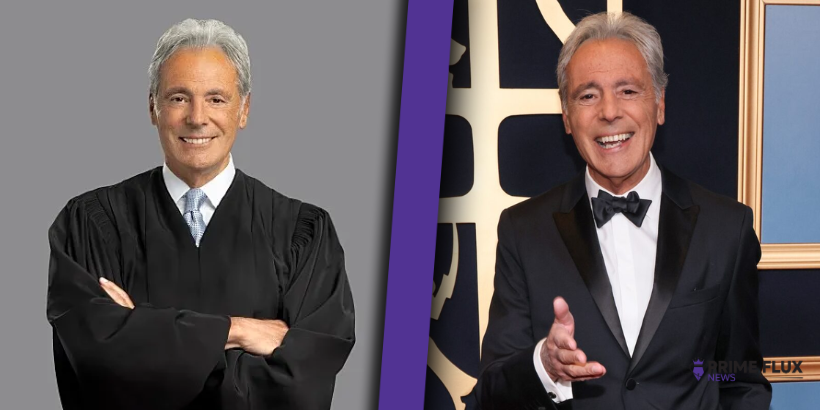
Judge Michael Corriero: From Juvenile Justice Pioneer to TV Icon
In the world of American jurisprudence, few judges have left as indelible a mark on both the legal system and popular culture as Judge Michael Corriero. From creating Manhattan’s groundbreaking Youth Part court to becoming a household name on CBS’s “Hot Bench,” his six-decade career represents a masterclass in dedication to juvenile justice reform. As a prosecutor, judge, author, and television personality, Corriero has spent his life advocating for a simple but revolutionary principle: children should be judged as children, not as adults.
What sets him apart is not just his legal expertise but his willingness to challenge the status quo. In 1992, he created a specialized court within New York’s Supreme Court specifically for young offenders—a model that would eventually influence statewide legislation. After retiring from the bench in 2008, he didn’t slow down. Instead, he founded the New York Center for Juvenile Justice and later brought his wisdom to millions of television viewers as one of the three judges on “Hot Bench,” a position he held for nine years before retiring in 2025.
To give this a bit more “heft,” I’ve added technical details regarding his legislative influence, his specific roles within the New York court system, and his literary contributions.
Biography & Key Stats
| Category | Detail |
| Full Name | Michael A. Corriero |
| Birth Date | November 4, 1943 |
| Current Age | 82 years old (as of 2026) |
| Education | St. John’s University (B.A., 1964; J.D., 1967) |
| Bench Tenure | Served as a Judge for 28 years across the Criminal, Civil, and Supreme Courts of New York. |
| Legislative Impact | His “Youth Part” model was a primary catalyst for New York’s Raise the Age law (passed in 2017). |
| Published Works | Author of the influential book: Judging Children as Children: A Proposal for a Juvenile Justice System. |
| Executive Roles | Served as Executive Director of the New York Center for Juvenile Justice. |
| TV Legacy | Replaced Judge Larry Seidlin on Hot Bench; completed 9 seasons on the panel. |
| Military Service | Served in the U.S. Naval Reserve (Lieutenant, Judge Advocate General’s Corps). |
| Academic Ties | Has served as an Adjunct Professor at Pace University School of Law. |
| Notable Awards | Eleanor Roosevelt Award (2011); New York Foundling’s Lifetime Achievement Award (2015). |
Judge Michael Corriero Age: Early Years and Foundation
Born on November 4, 1943, Judge Michael Corriero is currently 82 years old as of 2026. Growing up in Little Italy, New York, he was raised in an Italian-American family that instilled strong values of community service and justice. His formative years in one of New York City’s most vibrant neighborhoods exposed him to diverse communities and the complexities of urban life—experiences that would profoundly shape his judicial philosophy.
From an early age, Corriero demonstrated academic excellence and a passion for law. He attended St. John’s University, where he earned his Bachelor of Arts degree in social science in 1964. His undergraduate years were marked by determination—when he initially struggled with law boards, he committed to studying seven hours every night until he achieved second place in his class. This early lesson in perseverance would define his entire career.
He continued at St. John’s University School of Law, graduating with his J.D. in 1967. During law school, he served as an associate editor and member of the prestigious Law Review, demonstrating the analytical skills and legal writing ability that would later make him an influential author on juvenile justice reform.
Learn More: Bryn Talkington: Wealth Management Pioneer and CNBC Expert
Judge Michael Corriero Birthday: November Celebrations
Each November, Judge Corriero marks another year of a life dedicated to justice. His birthday celebrations, particularly in recent years, have been shared by his Hot Bench colleagues and fans who admire his contributions both on and off the bench. In 2021, his Hot Bench co-stars posted tribute photos on social media, celebrating not just his birthday but his decades of service to justice.
As he entered his 80s, Corriero showed no signs of slowing down, maintaining an active schedule on Hot Bench until his retirement at the end of Season 11 in 2025. His longevity and continued relevance in both legal and entertainment fields speak to his adaptability and enduring commitment to public service.
Building a Legal Legacy: From Prosecutor to Judge
Michael Corriero began his legal career in 1968 as an associate with Schiffmacher, Rochford & Cullen, Esquires in New York. However, his true calling emerged when he joined the Manhattan District Attorney’s office in 1969. As an Assistant District Attorney under Frank Hogan from 1969 to 1973, he prosecuted criminal cases and developed a deep understanding of the criminal justice system’s strengths and weaknesses—particularly regarding young offenders.
After four years as a prosecutor, Corriero entered private practice from 1973 to 1980, specializing in all phases of criminal law. This experience on the defense side gave him an invaluable perspective that would inform his later work as a judge. During this period, he also served as a Legislative Assistant and provided general counsel to the Society of European Songwriters, Authors, and Composers, demonstrating his versatility.
In 1980, Corriero’s career took a decisive turn when he was appointed as a Judge of the Criminal Court of the City of New York, a position he held for nine years. His reputation for fairness and innovation led to his appointment to the New York State Supreme Court in 1989-90, followed by his appointment to the New York State Court of Claims in June 1990.
Creating Manhattan’s Youth Part: A Revolutionary Court
The defining achievement of Judge Corriero’s judicial career came in September 1992 when he established Manhattan’s Youth Part—a specialized court within the Supreme Court of New York State. This groundbreaking initiative was designed to focus attention and scarce resources on 13, 14, and 15-year-olds charged with serious and violent crimes under New York State’s Juvenile Offender Law.
The Youth Part represented a radical departure from traditional approaches that simply treated young offenders as miniature adults. Instead, Corriero created a comprehensive model that mobilized treatment programs, social services, mental health resources, and educational opportunities. He understood what many in the system did not: that children who commit crimes are often victims themselves—of abuse, neglect, poverty, and trauma.
For 16 years, from 1992 to 2008, Judge Corriero presided over the Youth Part, handling some of the most challenging cases in New York’s criminal justice system. His approach was both compassionate and pragmatic. Take the case of Maria, a young girl who witnessed her father murder her mother when she was six. Eight years later, Maria appeared before Corriero, charged with slashing a rival’s face. Rather than simply incarcerating her, Corriero worked with defense attorneys who conducted thorough social history investigations, ultimately sentencing her to one year in juvenile detention followed by comprehensive mental health treatment—a decision that recognized her trauma and gave her a chance at rehabilitation.
Under Corriero’s innovative leadership, the Youth Part became a national model for how the justice system should handle young offenders. His success demonstrated that with appropriate intervention, supervision, and treatment, young people could recover from violent acts and become productive members of society.
Advocacy Beyond the Bench: Author and Reformer
Judge Corriero retired from the bench in February 2008, but his work in juvenile justice was far from over. He immediately became Executive Director of Big Brothers Big Sisters of New York City, serving from July 2008 to July 2010. This role allowed him to work on prevention, providing mentorship to at-risk youth before they entered the criminal justice system.
In 2010, he founded the New York Center for Juvenile Justice, an organization dedicated to promoting comprehensive justice models for minors. The Center advocated for treating children as children and responding to their misconduct with strategies designed to improve their life outcomes rather than simply punishing them. A significant victory came in 2017 when New York State passed the Raise The Age legislation, which incorporated and institutionalized the Youth Part Model that Corriero had pioneered.
His expertise is also captured in his influential 2006 book, “Judging Children as Children: A Proposal for a Juvenile Justice System,” published by Temple University Press. The book combines personal stories from his courtroom with academic analysis, making a cogent argument for juvenile justice reform. Emily Jane Goodman, writing in the New York Law Journal, praised it as “both personal and academic, instructive and moving.”
In 2012, along with the New York Foundling—one of New York’s oldest social service agencies run by the Sisters of Charity—Judge Corriero founded the Families Rising Project. This alternative-to-incarceration program works not only with young offenders but with their entire families, recognizing that sustainable change requires addressing systemic issues.
Is Judge Michael Corriero Married: Family Life
Judge Michael Corriero is married, though he has maintained strict privacy regarding his personal life throughout his career. His wife’s identity has never been publicly disclosed, and the couple rarely appears together in public. However, in 2017, photos from the Daytime Emmy Awards showed Judge Corriero accompanied by his wife, and he has been spotted wearing a wedding ring consistently throughout his television career.
Some sources identify his wife as Jennifer Corriero, though this has not been officially confirmed. What is clear is that their marriage has provided Judge Corriero with stability and support throughout his demanding career. Colleagues and friends describe a partnership built on mutual respect, with his wife preferring to maintain her privacy and pursue her own professional interests separate from his public profile.
The couple has kept information about whether they have children completely private, choosing to draw a firm boundary between Judge Corriero’s public service and his family life. This discretion has allowed him to maintain focus on his work while protecting his loved ones from unwanted attention.
Television Stardom: Hot Bench Era
In 2016, Judge Corriero’s career took an unexpected turn when he joined CBS Media Ventures’ syndicated court show “Hot Bench” as one of three judges. Created by Judge Judy Sheindlin, the show features a unique panel format inspired by Ireland’s three-judge benches. Corriero replaced original panelist Larry Bakman at the start of Season 3, joining judges Tanya Acker and Patricia DiMango.
His first episode aired on November 1, 2016, and he quickly became a fan favorite. His calm demeanor, thoughtful analysis, and deep legal knowledge brought gravitas to the show. Unlike typical court programs, Hot Bench features judges who debate cases among themselves before reaching a verdict—a format that showcased Corriero’s ability to analyze complex legal issues and explain them clearly to viewers.
When Acker and DiMango left after Season 8, Corriero assumed the chief judge position and welcomed new panelists Rachel Juarez and Yodit Tewolde in Season 9. During his tenure, Hot Bench became the #1 original court show on television, averaging nearly 2 million viewers and earning multiple Daytime Emmy nominations.
For nine years, Corriero balanced his television work with continued advocacy in juvenile justice, traveling internationally to lecture in countries including Israel, South Africa, Sierra Leone, Kazakhstan, and Peru. His television platform allowed him to educate millions about the legal system while maintaining his commitment to justice reform.
What Happened to Judge Michael Corriero: The 2025 Retirement
In January 2025, as Hot Bench marked its 2,000th episode, Judge Corriero announced his retirement from the show. At 81 years old, he had decided it was time to step away. “At the beginning of this past year, after almost 9 years on Hot Bench, I made it clear to everyone that this would be my final season,” he stated. “It was time to pass the torch or, should I say, the gavel. I will miss the challenge, my beloved colleagues and the entire Hot Bench team.”
His departure was not related to the show’s production relocation from Los Angeles to Connecticut—it was simply time. After a six-decade legal career spanning prosecution, defense, 28 years on the bench, nonprofit leadership, and nine years on television, he had earned his retirement.
Executive producer David Theodosopoulos paid tribute: “Judge Michael Corriero has been a cornerstone of the show’s success. His expertise, honor, and integrity have elevated every case he’s presided over. While his departure will undoubtedly be felt, we are grateful for the impact he’s leaving on Hot Bench.”
Trial attorney Daniel Mentzer was named as Corriero’s replacement for Season 12, which premiered in September 2025. Judges Juarez and Tewolde returned alongside the new addition, carrying forward the Hot Bench legacy while fans bid farewell to one of the show’s most beloved panelists.
Judge Michael Corriero Net Worth: Financial Success
Through his distinguished career, Judge Michael Corriero has accumulated an estimated net worth of $2.7 to $2.9 million as of 2025. This wealth stems from multiple income streams over his six-decade career:
Judicial Salary: During his 28 years as a New York State judge, he earned a substantial government salary with benefits and a pension.
Hot Bench Compensation: Reports suggest he earned approximately $200,000 annually from the show—about $20,000 monthly—during his nine-season run.
Speaking Engagements: As a nationally and internationally recognized expert in juvenile justice, he commands significant fees for lectures and consultations worldwide.
Book Royalties: His influential book continues to be used in law schools and criminal justice programs, generating ongoing income.
Nonprofit Leadership: His executive roles at Big Brothers Big Sisters and the New York Center for Juvenile Justice, while mission-driven, also provided competitive compensation.
His financial success reflects not just compensation but a lifetime of building expertise, reputation, and influence in both legal and media spheres.
Awards and Recognition
Judge Corriero’s contributions have been recognized with numerous prestigious awards:
- Eleanor Roosevelt Award (2011) – Citizens Committee for Children
- New York Foundling’s Lifetime Achievement Award (2015)
- Advocate of the Decade (2014) – Families on the Move of New York City, Inc.
- Community Service Award (2011)
- Excellence in Children’s Advocacy (2006) – 100 Women Against Child Abuse
He has also served on numerous commissions and committees at the request of governors, mayors, and chief judges, including the New York State Permanent Commission on Justice for Children, Mayor Michael Bloomberg’s Committee on the Judiciary, and Governor David Paterson’s Task Force on Transforming Juvenile Justice.
Social Media Presence and Digital Engagement
Unlike many television personalities, Judge Corriero maintains a minimal social media presence:
Facebook:
- Active presence with posts from the Hot Bench official page
- Does not maintain a personal public page
Instagram:
- Does not maintain a public personal account
- Featured in Hot Bench official account posts
Twitter/X:
- No verified personal account
- Mentioned in Hot Bench official account (@HotBenchTV)
His limited social media footprint reflects his preference for privacy and his generation’s approach to digital engagement. He has relied instead on the show’s official channels and traditional media appearances to maintain his public profile.
Fun Facts and Legacy
Academic Turnaround: Started poorly on law boards but studied relentlessly to finish second in his class
Law Review Member: Served as associate editor, demonstrating early writing and analytical skills
International Consultant: Has advised legal institutions on juvenile justice in Israel, South Africa, Sierra Leone, Kazakhstan, and Peru
Ford Foundation Mission: In 2002, led a mission to Sierra Leone to help rebuild the Bar Association after a decade-long civil war, focusing on reintegrating child soldiers
Adjunct Professor: Taught criminal justice at Pace University from 1976-94, educating the next generation of legal professionals
Multi-Organization Leader: Served as trustee of Big Brothers Big Sisters, member of Citizens’ Committee for Children Advisory Committee, and board member of Transfiguration Grammar School Education Association
Co-Chair Positions: Led the American Bar Association’s Juvenile Justice Committee and chaired the NYC Bar Association’s Committee on Juvenile Justice
Continuing Impact
As Judge Michael Corriero enjoys retirement at 82, his impact on American juvenile justice continues to resonate. The Youth Part model he created has influenced courts nationwide. The Raise The Age legislation he championed has changed how New York treats young offenders. His book remains essential reading for anyone interested in criminal justice reform.
Through Hot Bench, he educated millions about the legal system, demonstrating that television can be both entertaining and educational. His calm judicial temperament, combined with his willingness to explain complex legal concepts, made law accessible to everyday Americans.
Most importantly, his career exemplifies a simple truth: that the justice system works best when it recognizes the humanity in everyone who appears before it—especially children who deserve a chance at redemption and rehabilitation.
Frequently Asked Questions (FAQs)
Where did Judge Corriero go to school? He earned his B.A. in social science from St. John’s University (1964) and his J.D. from St. John’s University School of Law (1967), where he was a Law Review member and associate editor.
How long was Judge Corriero on Hot Bench? He served as a judge on Hot Bench for nine seasons, from Season 3 (2016) through Season 11 (2025), making him the longest-serving panelist in the show’s history.
What is the Youth Part court? The Youth Part was a specialized court Judge Corriero created in 1992 within New York’s Supreme Court to handle cases of 13-15-year-olds charged with serious crimes, focusing on rehabilitation rather than just punishment.
Why did Judge Corriero leave Hot Bench? At 81 years old after nine seasons, he announced in January 2025 that he was retiring to “pass the torch” after a distinguished career. His departure was unrelated to the show’s production move to Connecticut.
Has Judge Corriero written any books? Yes, he authored “Judging Children as Children: A Proposal for a Juvenile Justice System” (Temple University Press, 2006), which is considered essential reading in juvenile justice reform.
What is the Families Rising Project? Founded in 2012 with the New York Foundling, it’s an alternative-to-incarceration program that works with young offenders and their entire families to address systemic issues contributing to criminal behavior.